

Crypto payments have been a rapidly heating-up track over the past two years. Within the industry, we can see that virtual currency exchanges, wallet companies, card-issuing infrastructure platforms, crypto payment companies, and even DeFi protocol projects are all launching their own crypto cards (U cards/VCC virtual credit cards).
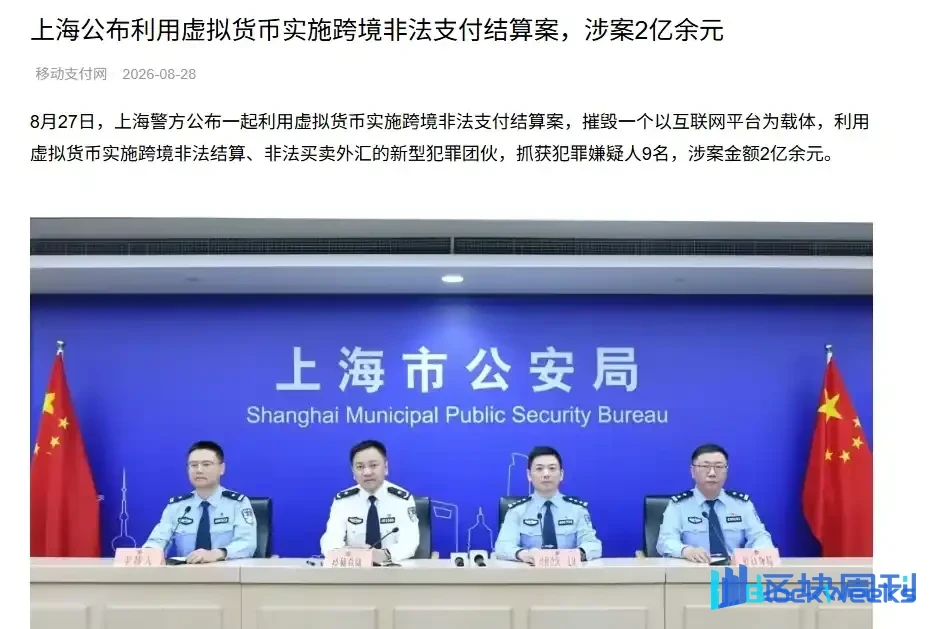
But judicial authorities' attention to U card/VCC virtual credit card project parties did not start only now. As early as four or five years ago, Lawyer Shao's team began to take on and represent card-issuing project parties in cases involving the crime of illegal business operations, and recently the team has also represented two criminal cases involving operators of VCC card projects.
As a lawyer who has long focused on criminal risks in the crypto field, rather than how hot the crypto payment track is, I am more concerned with: why do card-issuing project parties repeatedly get accused by mainland Chinese judicial authorities of suspected illegal business operations? Where exactly is the boundary between crime and non-crime?
[Note: This article only discusses the legal risks of the crime of illegal business operations under mainland Chinese criminal law for card/VCC virtual credit card project parties. Regulatory compliance issues of related businesses in other countries and regions are outside the scope of this article.]
I Author of this article: Lawyer Shao Shiwei
1
Why are more and more entrepreneurs entering the U card/VCC virtual card track?
Why are so many institutions flocking to do the crypto U card/VCC virtual credit card business?
Because the demand truly exists. There are a large number of virtual currency holders in mainland China, and they face two common pain points: first, they want to turn USDT into RMB to spend, but selling it to strangers through off-exchange OTC easily results in receiving funds involved in cases, causing bank cards to be frozen ("card freezing"); second, they want to subscribe to overseas services such as ChatGPT and Netflix, but domestic bank cards often fail to make payments. These two demands have given rise to a stable market.
The business model of such platforms is very profitable: card opening fees of 10 to 249 US dollars, top-up fees of 0.8% to 1.35%, withdrawal fees of 2% + 5 US dollars, and cross-border fees calculated separately. Based on the more than 300,000 cards claimed by a certain platform, the card opening fees alone amount to millions of US dollars in revenue, plus the fees from each transaction, the profit is considerable.
With real demand and abundant profits, it is no wonder that from exchanges to wallet companies to startup teams, all are crowding into this track. But Lawyer Shao has found in handling cases that many practitioners have blind spots in their understanding of the legal risks of this business. The following are real confusions from parties in criminal cases involving the crime of illegal business operations:
Our platform is registered in Hong Kong and Singapore, not in mainland China, so why would it violate domestic law?
Our platform attaches great importance to compliance and only connects with licensed institutions.
We are only a technical service provider.
We only serve enterprises going overseas. The clients we connect with are all real merchants. The platform's funds are also all legal.
There are not a few entrepreneurs in the payment industry who enter with these cognitive blind spots. Next, we will specifically analyze at which stages U card/VCC virtual credit card platforms may trigger the risk of the crime of illegal business operations, and which factors affect the judgment of judicial authorities.
2
Five risk points for U card/VCC virtual card platforms suspected of the crime of illegal business operations
(1) The platform accepts USDT top-ups—legal risks of virtual currency exchange and source of funds
In China, the 2021 "Notice on Further Preventing and Handling the Risks of Virtual Currency Trading and Speculation" jointly issued by ten ministries and commissions, and the "Notice on Further Preventing and Handling Risks Related to Virtual Currency and Other Matters" (Yin Fa [2026] No. 42) issued on February 6, 2026 by the People's Bank of China and seven other departments, characterize "virtual currency-related business activities" as "illegal financial activities." But "illegal financial activities" is a characterization at the administrative regulatory level and is not directly equivalent to the "crime of illegal business operations."
If the card-issuing project party collects USDT only to keep it on behalf of users (similar to wallet custody), this is closer to the administrative level of "illegal financial activities"; if after collecting USDT it exchanges it into fiat currency, manages balances, and conducts payment settlement, then the business chain of "accepting USDT" becomes the starting point of the legal risk of the crime of illegal business operations.
If Chinese users are supported to use domestic mobile phone numbers and identity information, then regardless of whether the platform is registered in the United States, Hong Kong, or Singapore, it triggers the jurisdiction of Chinese law, because the place where the result of the act occurs (the processing of Chinese users' funds) occurs within China.
Factors affecting the judgment of judicial authorities:
Whether the deposit end is USDT or verifiable legal foreign currency (such as e-commerce payment for goods, labor remuneration paid by enterprises) determines whether the starting point of the fund chain can be verified by the traditional financial system. For the same "helping users issue cards," the legal evaluation is completely different when the deposit end is payment for goods settled by Amazon versus when the deposit end is USDT of unknown origin.
In addition, even if the deposit end is USDT, whether the platform's users have a real transaction background (for example, it is indeed overseas labor income settled in cryptocurrency) will also affect the judicial authorities' determination of the nature of the funds.
(2) The platform manages user balances—whether it is actually operating a payment business that requires a license
In plain terms, as long as users hand money (or something of value) to you for safekeeping, you record a balance in your own system, and users can later use this balance to consume or withdraw, you are operating a stored-value account. And stored-value account operation is a core licensed business stipulated in the "Regulations on the Supervision and Administration of Non-Bank Payment Institutions."
Therefore, even if the card-issuing project party cooperates with banks around the world to exchange the U recharged by users into US dollars and deposit it in a bank, if users need to consume or withdraw, they must initiate instructions through the platform's APP, and the platform system decides whether to execute or reject. Then no matter which bank the user's money is deposited in, the card-issuing project party is operating a stored-value account. This is also a point that many entrepreneurs overlook, because the law does not look at where the money physically is, but at who controls the flow of this money.
Factors affecting the judgment of judicial authorities:
If the platform only keeps ledger records at the technical level, and the money is directly deposited in the user's own account at a licensed institution (the user completes KYC themselves, and the licensed institution directly manages the user's funds), and the platform only provides an interface for viewing balances and initiating instructions—this is closer to "technical services" rather than "stored-value account operation." But this model hardly exists in the U card industry, because the particularity of USDT deposits determines that funds must first enter the platform's wallet, and then be exchanged and allocated by the platform.
(3) The platform serves mainland Chinese users—overseas payment licenses cannot replace domestic business access requirements
U card project parties usually claim to hold financial licenses in overseas jurisdictions, or claim to cooperate with licensed banks/card organizations, using this as a "compliance" endorsement. But these claimed "qualifications" have nothing to do with the regulatory requirements of mainland China, and conducting related business within China still constitutes illegal financial activity. There is a clear legal basis for this. According to Article 2, Paragraph 2 of the "Regulations on the Supervision and Administration of Non-Bank Payment Institutions," it is explicitly stipulated: "Where an overseas non-bank institution intends to provide cross-border payment services to domestic users, it shall establish a non-bank payment institution within the territory in accordance with the provisions of these Regulations."
A relatively common situation in the industry is that indeed no promotion is carried out domestically. But no geographical restrictions are imposed either, and Chinese users are supported to register and use freely. This ambiguous attitude is very dangerous legally, because if the user scale reaches a certain level, judicial authorities can still argue that the platform knew or should have known that there were a large number of Chinese users and still provided services.
Factors affecting the judgment of judicial authorities:
The platform's attitude toward Chinese users—active marketing (promotional language explicitly stating "most suitable for mainland Chinese users"), no restrictions (supporting Chinese mobile phone number registration, having a Chinese interface but not actively promoting), active restrictions (IP blocking, not accepting Chinese ID cards, no Chinese interface)—the risk levels corresponding to these three attitudes decrease progressively.
(4) The platform supports binding to WeChat and Alipay for consumption—clearing completed by licensed institutions does not mean the platform itself has no criminal risk
Some VCC platforms support users, after recharging USDT, to bind the virtual card to WeChat and Alipay for daily consumption. This model satisfies the needs of some domestic virtual currency users to convert USDT into daily consumption capacity and reduce the risk of card freezing in traditional off-exchange transactions.
From the perspective of fund flow, the user's USDT is exchanged to form a foreign currency card balance, and then domestic RMB consumption is completed through the overseas bank card network, ultimately realizing the value conversion of virtual currency into RMB purchasing power.
The criminal legal risks of this model need to be assessed in light of the actual fund flow paths. If the platform only provides virtual card technical services, and the actual card issuance, cross-border clearing, and foreign exchange settlement are all completed by institutions with the corresponding qualifications, Lawyer Shao believes that it cannot be determined that the platform is suspected of disguised foreign exchange trading merely because users ultimately make purchases in RMB.
Factors affecting the judgment of judicial authorities:
Some VCC platforms may believe that, since cross-border payment and foreign exchange settlement are ultimately completed through licensed card-issuing institutions, bank card clearing institutions, and banks, the platform itself does not face the risk of illegal business operations.
However, from the perspective of judicial authorities' review, the participation of licensed institutions in transactions does not mean that the business activities previously carried out by the platform are naturally lawful.
If the platform is actually responsible for pooling user funds, virtual currency exchange, determining exchange rates, and collecting fees, and completes subsequent payment and clearing through licensed institutions, then judicial authorities may further examine whether the platform, by using the channels of licensed institutions, actually operated unauthorized fund payment and settlement or foreign exchange exchange business.
In particular, when the transaction background and source of funds reported by the platform to cooperating institutions are inconsistent with the actual situation, it may also be considered that there is conduct using licensed channels to evade financial regulation.
Therefore, to determine whether a platform is suspected of the crime of illegal business operations, one cannot look only at whether the final funds passed through licensed institutions; rather, one should penetrate the entire transaction chain and examine which business links the platform actually controlled, and whether it carried out illegal fund payment and settlement or disguised foreign exchange trading through the relevant transaction arrangements.
(5) The platform independently determines exchange rates and earns the spread — whether it actually operates unauthorized exchange business
This point is related to point 4 but not entirely the same. Point 4 refers to the specific function of "supporting binding with WeChat or Alipay for daily consumption," while point 5 refers to the platform itself playing the role of a currency exchanger in the business chain — holding its own "pool" of USDT and US dollars, determining exchange rates itself, and earning the spread from exchanges itself.
If the platform's system has an "exchange rate quotation" function, and the exchange rate does not come directly from the real-time price of a licensed exchange or bank but is set by the platform itself (even if only by adding or subtracting a spread on top of the market price), then the platform is operating an exchange business. Doing this within China requires foreign exchange business qualifications; without qualifications, it is "illegal foreign exchange trading."
Factors affecting the judgment of judicial authorities:
The first is the object of exchange. If the platform only involves exchange between USDT and foreign currencies such as US dollars, there is a legal distinction between that and actually organizing exchange between RMB and foreign exchange.
The second is the platform's actual role. If the exchange is independently completed by a third-party institution, and the platform only provides technical interfaces, displays quotations, or collects technical service fees, that is different from the situation where the platform sets prices itself, controls funds, and bears the exchange obligation.
Finally, there are the transaction scale and operating proceeds. If the relevant conduct already constitutes illegal foreign exchange trading, it is still necessary to consider factors such as the amount of illegal business operations and illegal gains to determine whether the criminal prosecution threshold for the crime of illegal business operations is met.
3
Conclusion
U card/VCC virtual card business has genuine market demand, and the relevant technology and business models are also continuously developing. However, for practitioners and entrepreneurs in the payment industry, the criminal legal risks involved cannot be ignored either.
Offshore registration, holding overseas financial licenses, or cooperating with licensed institutions cannot naturally exclude the risk of the crime of illegal business operations. But regulatory violations are not equivalent to criminal offenses.
Even among U card/VCC virtual card platforms, different platforms may differ greatly in business models, fund flow paths, and the business functions they actually undertake. Therefore, in specific cases, it is still necessary to analyze, in light of the platform's actual operating model and the case evidence, whether the relevant conduct meets the constitutive elements of the crime of illegal business operations, and on that basis explore the room for defense.