
This article is compiled and organized by BlockWeeks
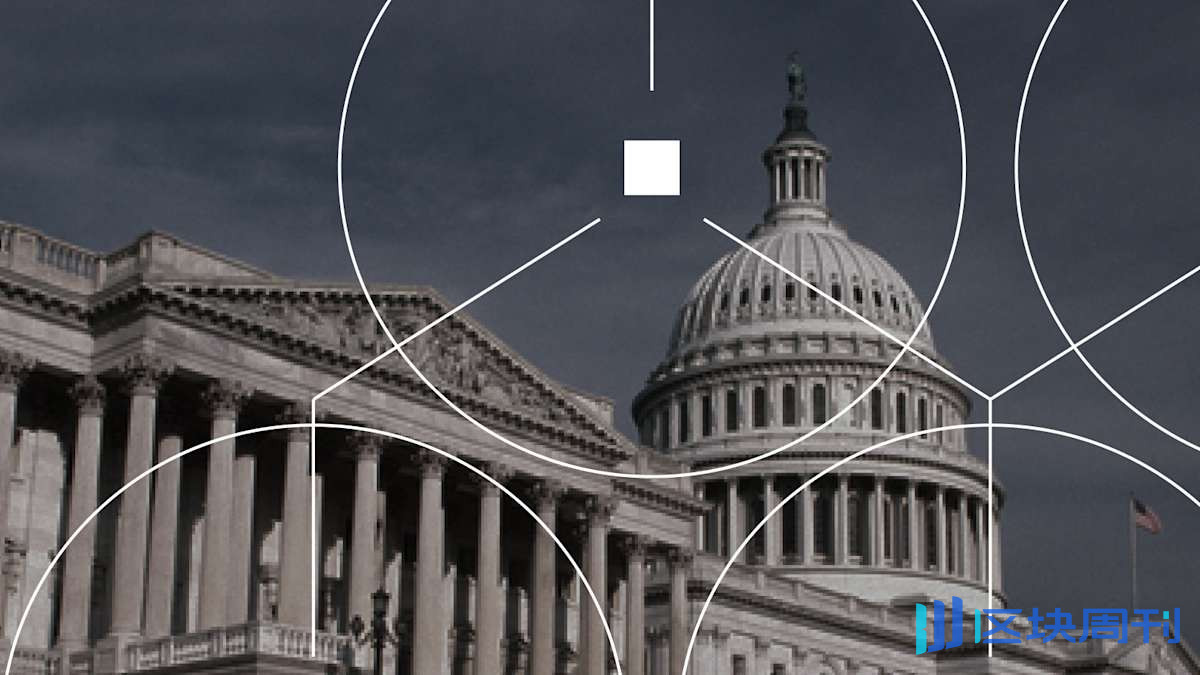
The U.S. Senate is highly likely to pass this week a bipartisan infrastructure bill totaling more than $1 trillion, for projects including ports, bridges, roads, and high-speed broadband. Yet the bill's tax reporting provision targeting cryptocurrency "brokers" ultimately received no amendment changes—the crypto industry's effort to secure an exemption fell short at the last moment.
This provision is buried in the bill's "pay for" section, i.e., the content that offsets the bill's cost through new revenue or spending cuts. It expands the definition of "broker" under U.S. Internal Revenue Service (IRS) reporting rules, bringing multiple links in the cryptocurrency ecosystem and market infrastructure into scope.
Original text: even "applications" and "decentralized exchanges" were written into the definition
The original wording expanded "broker" to mean: "any person who (for consideration) regularly provides services or applications (even if non-custodial in nature) to facilitate the transfer of digital assets, including any decentralized exchange or peer-to-peer marketplace."
This formulation was seen by the industry as highly dangerous: it could lead the IRS to classify ecosystem participants that in fact have no compliance capability at all as brokers. The stated goal of the provision is to recover lost tax revenue from crypto transactions, but the broad wording would sweep in entities that neither hold user identity information nor have any connection to taxable events, including:
- Network participants such as nodes, validators, and miners;
- Non-custodial services such as software wallets, hardware wallets, and multi-signature collaborative custody;
- Software developers who develop applications for third parties;
- Decentralized exchanges, DeFi applications, and NFT marketplaces.
The first victory over the weekend: five literal substantive improvements
Over the previous weekend, crypto advocates succeeded in narrowing the wording to: "any person who (for consideration) is responsible for regularly providing services on behalf of others to effectuate the transfer of digital assets." This version was seen as a major step forward for five reasons:
First, the word "application" was deleted, making it harder to pin the "broker" label on wallet software developers, especially when the software is free and open source.
Second, the qualifier "(even if non-custodial in nature)" was deleted, making it harder for non-custodial services to be deemed brokers.
Third, "facilitate" was replaced with "effectuating." The former has a broader meaning, meaning "to make an action or process easier"; the latter is closer to "actually making it effective or operational."
Fourth, the explicit references to "decentralized exchanges" and "peer-to-peer marketplaces" were completely deleted.
Fifth, the qualifier "on behalf of others" was added, narrowing the scope to "persons" who "regularly" provide "services on behalf of others to effectuate the transfer of digital assets." The industry consensus is that "on behalf of others" implies a contractual relationship between the "broker" and the "user," and that no such relationship exists between network parties (users, nodes, miners, validators), between users and open-source software developers, or between traders and decentralized exchanges.
The updated wording is mainly intended to exclude network participants that simply cannot comply—nodes, miners, validators, and the like—which should be understood as making regulation smarter rather than looser. But the text itself remains very broad and could still be read to cover many types of entities that should not be covered, because they neither understand the nature of user transactions nor may even know who the users are at all.
Still in the line of fire: miners, Lightning Network nodes, and multi-signature wallets
Miners and validators. Technically, they could be seen as "effecting the transfer of digital assets on behalf of others," and may even be "for consideration" (i.e., paid in the form of transaction fees), but realistically they have no way of knowing who their "users" are, nor any insight into the nature of the transactions they confirm during block production.
Lightning Network routing nodes. Lightning nodes face a similar situation, and even more literally fit "effecting the transfer of digital assets on behalf of others." Although two counterparties can exchange BTC trustlessly without an intermediary, without routing nodes a payment cannot flow from point A through point B to point C.
Wallet and multi-signature service providers. If non-custodial wallets can track and report user behavior—especially wallets that charge for their services—they could still be caught up in the "broker" definition. This may include "collaborative custody" service providers using multi-signature: they cannot unilaterally move client funds and thus cannot be counted as custodial services, but they may have the ability to monitor and report client activity.
The "unanimous consent" farce on the Senate floor
The amendment fight quickly split into two tracks: one pushed by Wyden, Lummis, Toomey, and others, seeking to more clearly exclude developers and validators; the other a compromise version led by Warner, Portman, and Sinema. The latter generalized the exclusion for validators but gave no exemption to software or protocol developers. Despite its limitations, the compromise amendment was still an improvement over the original text.
Also noteworthy was the amendment proposed by Senator Ted Cruz (R-Texas), which advocated deleting the entire crypto provision from the bill; but since the crypto provision itself is one of the bill's "pay fors," deleting it would cause the entire infrastructure bill to no longer remain revenue-neutral, so it was widely seen as impossible to pass.
On Monday afternoon, the two amendments finally entered the Senate voting process, and they could only pass by "unanimous consent"—that is, if any single senator objected, the amendment would fail.
Senator Pat Toomey (R-Pa.) delivered a strongly worded defense, backing the bipartisan compromise amendment and requesting its passage by unanimous consent. He specifically explained that the amendment would explicitly exclude developers, validators of all kinds, and any entity that technically or operationally cannot comply.
Subsequently, Senator Richard Shelby (R-Ala.) sought to attach an entirely unrelated amendment of his own (2535) to the compromise amendment. Shelby's amendment contained $50 billion in additional military spending, a large portion of which was for revitalizing Navy and Coast Guard shipyard facilities, and Senator Bernie Sanders (I-Vt.) expressed opposition. After the attachment request failed, Shelby turned to opposing the compromise amendment, killing it outright.
Immediately afterward, Ted Cruz introduced his own amendment calling for the deletion of the entire crypto broker provision. Shelby again sought to attach his own amendment, Cruz refused, and so Shelby voiced opposition to Cruz's amendment. A legislative battle over crypto tax reporting was thus completely derailed by an issue entirely unrelated to crypto.
The next battleground: SEC, FATF, and FinCEN
The legislative melee is only the beginning. How the SEC's power boundaries and mode of intervention will evolve will have a major impact on the entire ecosystem, and its roadmap is expected to become clearer in the coming weeks to months.
At the international level, FATF guidance on the "travel rule" and anti-money laundering policy for digital assets is still advancing, and many member states' AML policymaking and enforcement for digital assets are also continuing to evolve. Echoing this is the FinCEN proposed rule put forward in December 2020—which would strengthen AML monitoring and reporting requirements for crypto brokers, in line with FATF guidance, and is likely to resurface in the coming months.
This legislative encounter in Washington brought the crypto industry an unexpected and fast-paced challenge. The industry's response was to act quickly in coalition with allies, which also demonstrated crypto's growing influence in Washington: the industry pressed key policymakers and lawmakers to take public positions and pushed multiple amendments into the voting process. Before the amendments took the stage, advocates had in fact already won changes to the original text, a marked improvement over the starting point as initially reported; the White House and Treasury also visibly softened their positions amid criticism, which can be seen as a victory.
The market votes with prices
The crypto market seems to agree with this assessment. Throughout the debate, Bitcoin and Ethereum continued to rise, up about 20% and 50% respectively since the relevant provision was first reported. Galaxy OTC's over-the-counter trading business recorded significant and sustained growth in buy-side interest across all assets, with overall trading volume reaching two to three times that of several weeks earlier, and institutional interest clearly warming in recent weeks. Although the rebound from the local bottom predated the Washington battle, the ability to remain strong amid uncertainty shows that retail and institutional interest in the space remains resilient.
In the end, advocates inside and outside Congress made a strong case to the American public throughout the legislative battle, explaining the benefits of this technological movement and warning against stifling innovation. The broad support the industry ultimately garnered will continue to play a role when the bill moves to the House and in future legislative battles. Next, the industry must push policymakers to follow a more orderly legislative process when examining the future of this innovative industry.