Binance co-founder Yi He has warned Chinese-speaking cryptocurrency users against transferring funds linked to questionable deals in Myanmar, Cambodia and informal USDT transactions, saying suspicious deposits could result in law enforcement freezes.
Summary
- Yi He warned Binance users against suspicious USDT deals and transfers involving Myanmar and Cambodia.
- Binance says compliance systems can flag risky cryptocurrency addresses before deposits reach the exchange platform.
- Users receiving funds for friends or relatives may face additional source-of-funds checks under existing procedures.
- Law enforcement freezes can involve lengthy investigations, with Binance unable to independently release restricted assets.
- The warning came during Binance’s withdrawal restoration following its major October 29 cryptocurrency security breach.
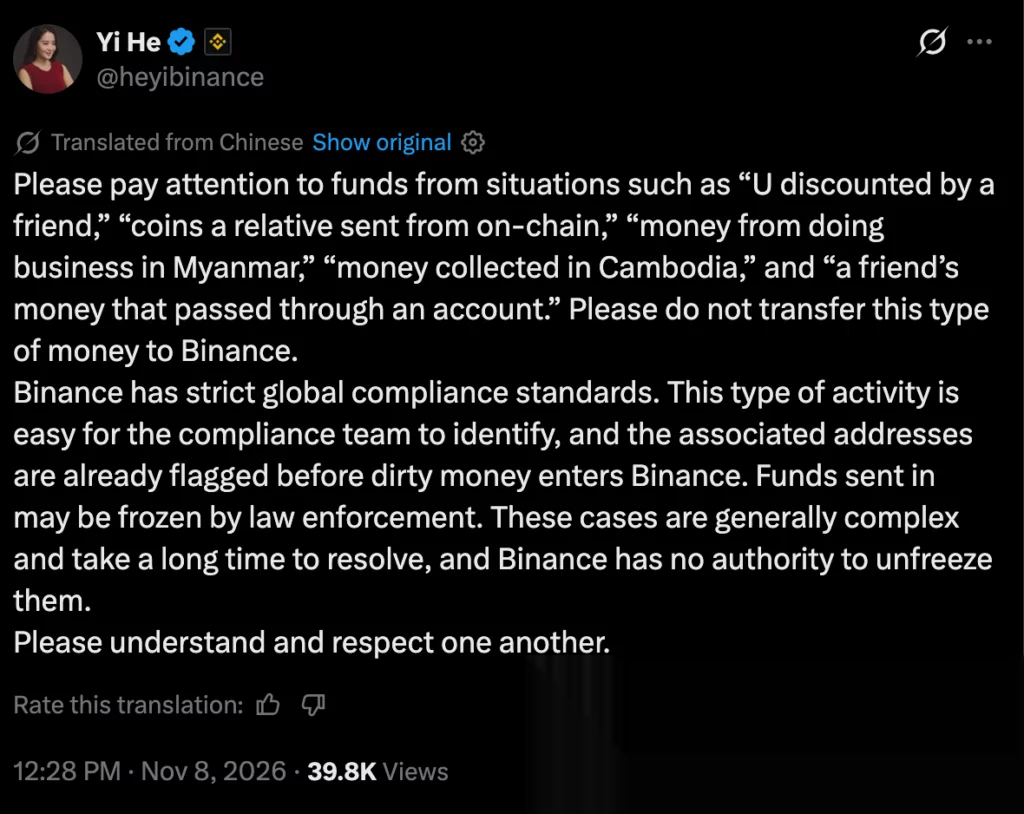
In a post on X, Yi He identified several situations in which customers should avoid sending cryptocurrency to Binance. Her examples included discounted USDT purchased from friends, tokens received through relatives, business proceeds from Myanmar, payments collected in Cambodia and funds temporarily moved through accounts on behalf of other people.
The warning concerns the origin of the funds and their connections to other wallets, even when the account receiving the cryptocurrency has not directly participated in suspected wrongdoing. Yi He said Binance’s compliance systems can identify risky addresses before deposits reach the exchange.
Yi He Warns Binance Users About Suspicious Transfers
Among the transactions she identified were informal arrangements in which one person receives cryptocurrency or handles payments for someone else without a clear understanding of where the money originated.
Yi He specifically mentioned “money from doing business in Myanmar” and “money collected in Cambodia” in the translated post. She placed those examples alongside discounted USDT purchases and transfers involving relatives or friends.
The warning did not describe all commercial activity involving those countries as illegal. Instead, Yi He urged users to avoid sending funds from the listed circumstances when their origins or transaction histories raise concerns.
“Binance has strict global compliance standards,” Yi He said, adding that associated addresses may already carry risk flags before cryptocurrency reaches the platform.
She warned that law enforcement authorities could freeze funds linked to suspicious activity. Such cases can involve lengthy investigations, and the exchange may lack authority to release assets subject to official restrictions.
The post did not identify particular customer accounts, announce a new regional deposit ban or disclose how many users have experienced freezes connected to the examples she listed.
Binance Uses Wallet Screening and Source-of-Funds Checks
Binance’s existing compliance procedures require customers to provide information about the origin of deposits when transactions trigger further examination.
Under its source-of-funds guidance, the exchange distinguishes between a customer’s accumulated wealth and the origin of a particular deposit. Account holders may therefore need to explain where individual cryptocurrency transfers came from, even after completing identity verification.
The exchange’s request-for-information process covers unusual account activity, transactions associated with high-risk wallet addresses and possible violations of its terms of use.
Customers can face temporary account restrictions while reviews take place. Binance says some restrictions can be resolved by submitting requested documentation, although cases involving law enforcement orders follow separate procedures.
Its published guidance on stolen funds states that the exchange cannot independently release assets subject to an appropriate official freezing order.
Binance has not publicly said whether Yi He’s latest warning introduces additional screening rules or changes existing compliance thresholds for transactions associated with Myanmar and Cambodia.
Myanmar and Cambodia Face Scrutiny Over Crypto Scam Funds
The countries mentioned in Yi He’s warning have featured in international investigations into cryptocurrency fraud, underground banking and money laundering networks.
A September 2026 FinCEN investigation examined $12.7 billion in reported financial activity associated with Southeast Asian cryptocurrency investment scams. The reporting described how criminal networks used intermediaries, money mules and cryptocurrency exchanges to transfer suspected proceeds.
In April, the U.S. Justice Department announced criminal charges involving a cryptocurrency investment fraud compound in Myanmar and plans for another operation in Cambodia. Authorities said the wider enforcement effort included approximately $700 million in restrained cryptocurrency and the seizure of hundreds of fraudulent websites.
Cambodia has faced separate investigations involving the Huione network, which U.S. authorities accused of helping process proceeds from online fraud.
In April 2026, crypto.news covered the extradition of a former Huione Group chairman to China in connection with allegations involving fraud and money laundering.
Those investigations provide context for the locations mentioned in Yi He’s warning, but they do not establish that the specific transactions she described were connected to any identified criminal organization.
Warning Comes During Binance’s Post-Hack Withdrawal Recovery
The compliance warning arrives as Binance continues restoring withdrawal services after the October 29 security breach that affected approximately $6.34 billion in digital assets.
On November 1, the exchange resumed selected withdrawals across major blockchain networks, including Bitcoin, Ethereum and Solana.
Its November 3 recovery announcement expanded the reopening to additional Ethereum and Solana tokens, while other assets remained subject to security checks.
Binance said in its November 3 incident update that it had replenished 98% of affected token assets by October 31 and frozen or intercepted approximately $2.85 billion in cryptocurrency linked to the attack.
The exchange attributed the incident to compromised infrastructure and said it was strengthening wallet protections while working with law enforcement and blockchain intelligence companies.
Yi He’s November 8 post did not connect the suspicious-deposit warning to the attack or suggest that the temporary withdrawal restrictions resulted from the compliance concerns she described.