
The XRP payment volume spiked to an unprecedented 858 million in a single day, raising doubts about whether the XRP Ledger can maintain such high daily transaction volumes. A significant jump from recent baseline activity has occurred, reigniting discussions about the network's payment capacity and its future adoption path.
XRP volume picked up
The latest data indicates that XRP payment volume currently stands at 693.6 million, which is a 19.2% decrease from the recent peak of 858 million. The 30-day average for XRP payment volume is 674.5 million, suggesting that daily transfers in the 700 million range have set a new standard.
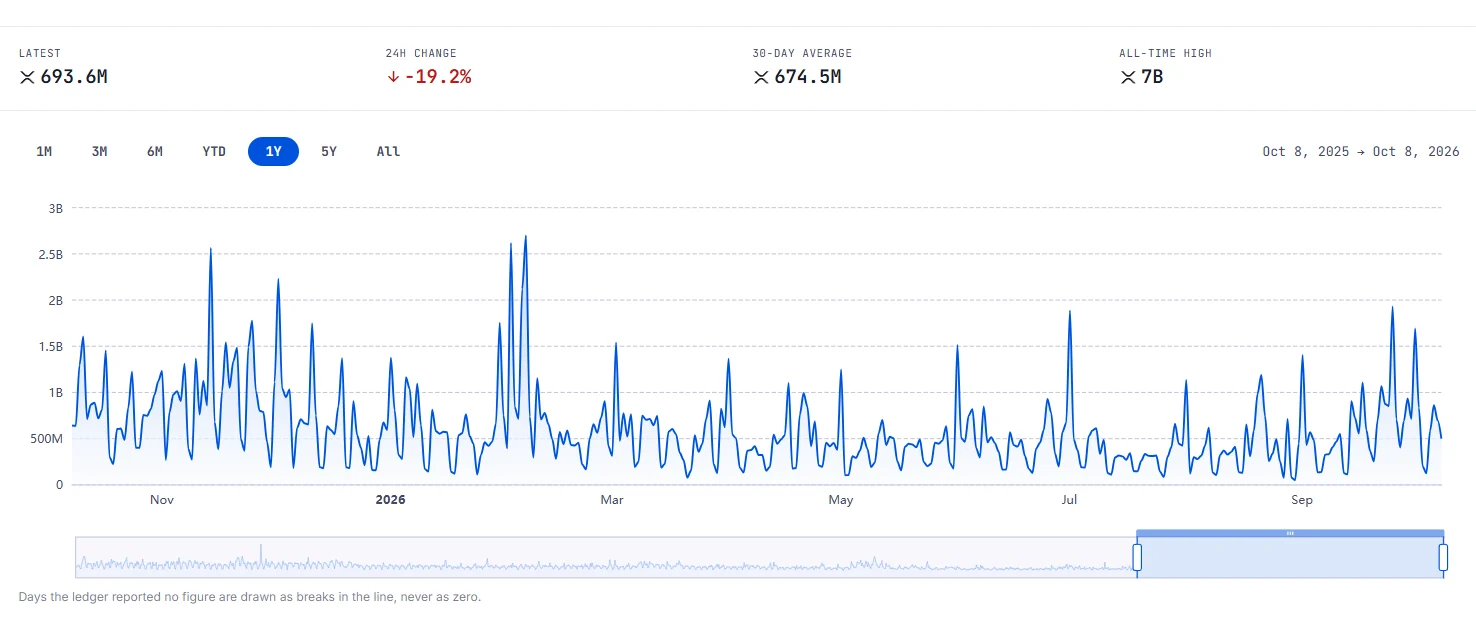
The network achieved a peak all-time high of 7 billion during its most active market period, indicating it has the technical capacity to support even higher throughput.
Can it reach high?
Achieving consistent billion daily volumes would mark a significant milestone in XRP's adoption journey. Although the network has reached 858 million, which shows it is getting close, sustaining this level of activity requires more than isolated spikes. Major volume surges typically follow regulatory clarity, exchange listings, or institutional adoption announcements, as historical patterns reveal. The distance to the billion mark is shrinking as current averages draw closer to that milestone.
Only 48% remains to reach the next major milestone, as the daily average currently stands at 674.5 million. The expansion of payment corridors and institutional partnerships are likely to be the catalysts that push volume over this barrier, according to industry observers.
The XRP Ledger dashboard displays 20,500 ledgers closed with an interval of 3.86 seconds, showing stable network performance at current volumes. With 17,900 active accounts, the network demonstrates a healthy level of user engagement.
Real-world payment adoption, rather than speculation, is what's really important for reaching sustainable billion daily volumes. The establishment of ongoing remittance corridors in key regions such as Southeast Asia and Latin America might provide the foundation for this jump. Volume spikes often accompany each new institutional partnership or regulatory approval.