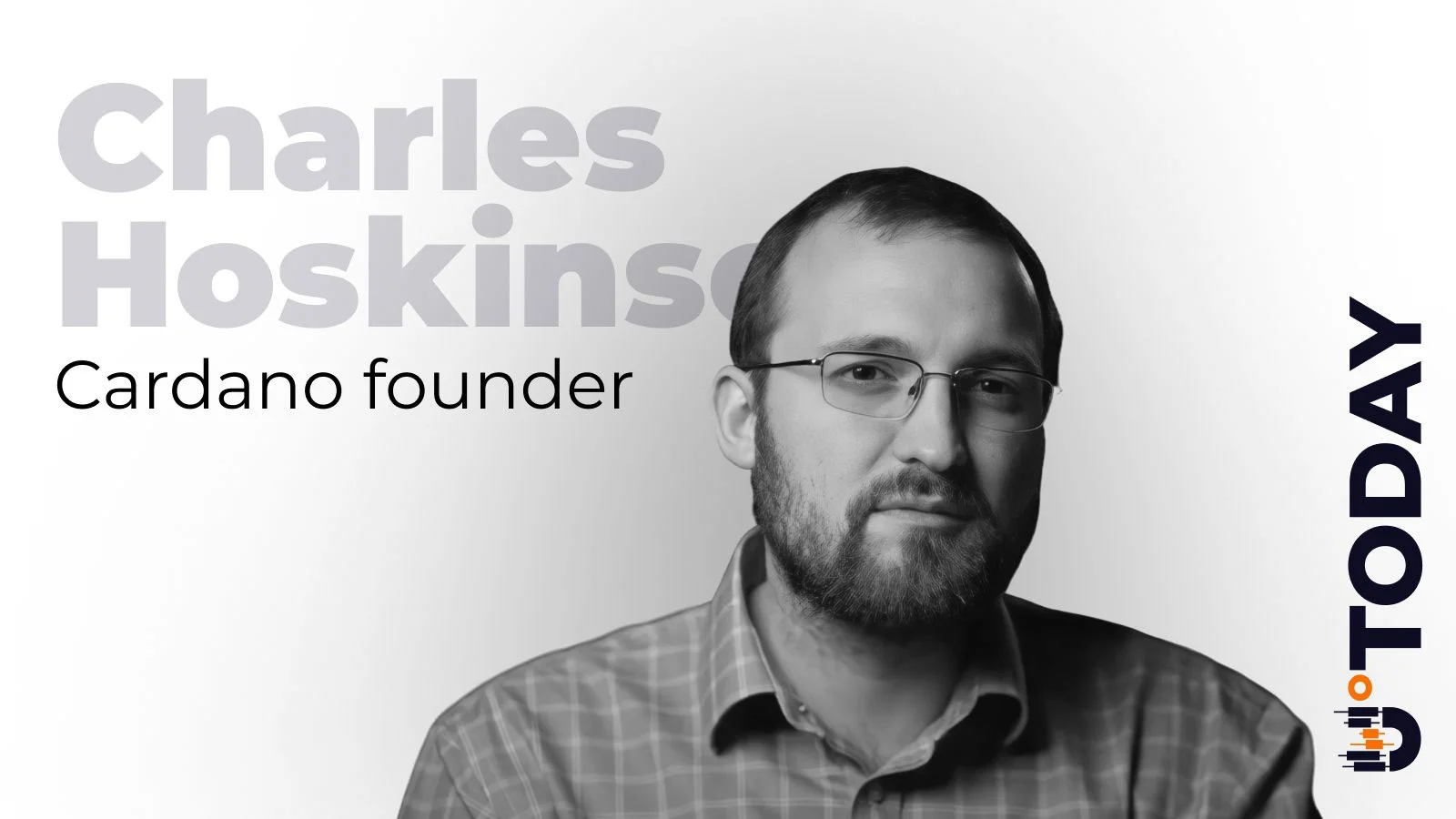


Cardano founder Charles Hoskinson has challenged Ethereum co-founder Vitalik Buterin over his warning that advances in artificial intelligence could weaken quantum-resistant cryptography, arguing that existing security standards already account for decades of mathematical attacks.
Summary
- Cardano founder Charles Hoskinson rejected Vitalik Buterin’s warning about AI threatening quantum resistant cryptographic systems.
- Vitalik warned that artificial intelligence could discover mathematical weaknesses in currently trusted lattice based cryptography.
- Hoskinson defended ML-KEM and ML-DSA, citing decades of mathematical research and established security testing against attacks.
- Ethereum’s proposed security roadmap favors hash based signatures as developers prepare for possible future attacks.
- NIST standardized lattice based encryption and digital signatures in 2024 following years of security evaluation.
Hoskinson responded on October 9 to Buterin’s concerns about lattice-based cryptography, which is used in several modern security systems. He argued that the Ethereum founder had not identified a credible new attack that would justify abandoning those methods or substantially increasing cryptographic key sizes. The disagreement follows Buterin’s warning that AI could uncover mathematical shortcuts that researchers have not discovered through conventional methods.
Cardano founder challenges Vitalik’s AI security warning
The dispute began after Buterin warned that rapid advances in AI-assisted mathematics could challenge assumptions behind cryptographic systems currently considered secure.
He identified lattice-based cryptography as a particular concern, arguing that increasingly capable AI systems might discover more efficient ways to solve mathematical problems used to protect digital information.
In his view, advances in automated mathematical research could compress decades of discoveries into a much shorter period. Such progress could force developers to reconsider the security of existing algorithms.
Buterin compared the possible development to advances in integer factorization, where researchers discovered methods that made certain calculations much easier than earlier estimates suggested.
The Ethereum co-founder argued that lattice-based security could experience a similar breakthrough, making some current parameter choices insufficient.
Hoskinson rejected the comparison, arguing that the history of integer factorization does not provide evidence of an equivalent weakness in lattice systems.
“The factoring analogy is wrong,” Hoskinson wrote, explaining that the improvements in integer factorization depended on specific mathematical techniques that have not been demonstrated against the lattice problems used in modern cryptography.
The Cardano founder pointed to research dating back to the introduction of the Lenstra–Lenstra–Lovász lattice reduction algorithm in 1982. He cited subsequent improvements in lattice sieving and other attack methods as examples of decades of testing.
According to Hoskinson, the security parameters used by modern lattice-based algorithms already account for known advances in those techniques.
His response followed concerns about AI-assisted attacks on cryptocurrency wallets raised by Ethereum Foundation researcher Justin Drake on October 7.
Drake warned that powerful AI systems might eventually discover attacks against the elliptic-curve cryptography used to authorize blockchain transactions. Buterin supported taking those possibilities seriously but discouraged users from rushing to move their funds into new wallets.
Hoskinson defends lattice cryptography used in security standards
A central part of Hoskinson’s argument concerns ML-KEM and ML-DSA, two cryptographic systems standardized by the U.S. National Institute of Standards and Technology (NIST).
ML-KEM allows parties to establish shared cryptographic secrets, while ML-DSA provides digital signatures used to authenticate information and verify authorization.
NIST approved both systems in August 2024 under FIPS 203 and FIPS 204, following years of research and public evaluation. The agency separately standardized SLH-DSA, a hash-based digital signature system, under FIPS 205.
Hoskinson argued that ML-KEM and ML-DSA were selected after researchers examined different methods of attacking lattice-based mathematical problems.
He maintained that the existence of mathematical structure does not automatically make an algorithm unsafe, particularly when security parameters are chosen using established attack-cost calculations.
Buterin had suggested that future AI advances could justify increasing the size of lattice-based keys substantially, potentially by a factor of ten.
Hoskinson rejected that proposal, describing it as “numerology” because the suggested increase was not supported by a specific algorithm or calculation.
According to the Cardano founder, choosing larger keys without identifying a corresponding attack does not provide a reliable method for measuring security.
He argued that researchers should first establish the computational cost of a new attack before determining whether existing cryptographic parameters require changes.
NIST currently describes ML-KEM and ML-DSA as algorithms believed to resist attacks from sufficiently powerful quantum computers. The standards do not establish that the systems are immune to every possible mathematical discovery.
Ethereum’s hash-based security plan faces criticism
Buterin’s concerns are connected to Ethereum’s work on cryptographic systems designed to resist future quantum computing attacks.
The network’s Lean Ethereum research increasingly favors hash-based signatures, including WOTS and SPHINCS-based constructions, for applications where developers can use them.
Buterin has argued that hash-based approaches may offer stronger long-term security because they do not rely on the same mathematical assumptions as lattice-based systems.
However, Hoskinson challenged the suggestion that hash functions are automatically safer because they are intended to have less exploitable structure.
He pointed to historical weaknesses in MD5 and SHA-1, two hash algorithms that researchers successfully attacked through weaknesses in their internal designs.
Hoskinson said even SHA-256 does not have a mathematical proof establishing immunity from all possible attacks.
“Its security is that nobody has broken it yet,” he wrote, arguing that the same standard of scrutiny should apply across cryptographic families.
He questioned Ethereum’s previous research into Poseidon and Poseidon2, hash functions designed for efficient use in certain blockchain proof systems.
Ethereum researchers have already moved away from Poseidon in their layer-1 roadmap, favoring established alternatives such as SHA-2 and BLAKE2s.
In August, Ethereum Foundation researcher Justin Drake explained that improvements in binary-field proof systems had made conventional hashes more practical for future network designs.
Hoskinson argued that hash-based signatures remain useful where their limitations are acceptable, but they cannot replace every function performed by public-key cryptography.
The disagreement extends to encryption systems used in secure messaging, websites and other applications that must establish protected communications between parties.
AI cryptography debate reaches blockchain wallet security
The exchange between the two founders comes as blockchain developers consider how to protect digital assets against future advances in AI and quantum computing.
Buterin has advised users to consider keeping cryptocurrency in addresses whose public keys have not been exposed through outgoing transactions, provided they can do so safely.
He emphasized that the recommendation does not justify hurried wallet migrations, which can create their own security risks.
The Ethereum founder has supported plans to make Ethereum resistant to quantum attacks, including changes to transaction signatures, consensus mechanisms and zero-knowledge proof systems.
Hoskinson maintains that research into lattice-based methods should continue alongside work on hash-based alternatives.
The debate has reached companies developing institutional custody systems. In May, BitGo tested quantum-resistant wallet signing using ML-DSA technology developed with Silence Laboratories.
The demonstration examined whether post-quantum signatures could operate within existing institutional wallet procedures. It was a controlled test, not evidence that current wallet cryptography had been broken.
Other blockchain networks are working on similar protections. Sui’s post-quantum security roadmap includes both lattice-based and hash-based signature options for future account authentication.
Hoskinson’s October 9 response did not announce a new Cardano cryptographic upgrade or a deployment schedule. He called for any newly discovered attack to undergo testing, cost analysis and review before developers revise security parameters or abandon established algorithms.