











Original | Odaily Planet Daily (@OdailyChina)
Author|Azuma (@azuma_eth)
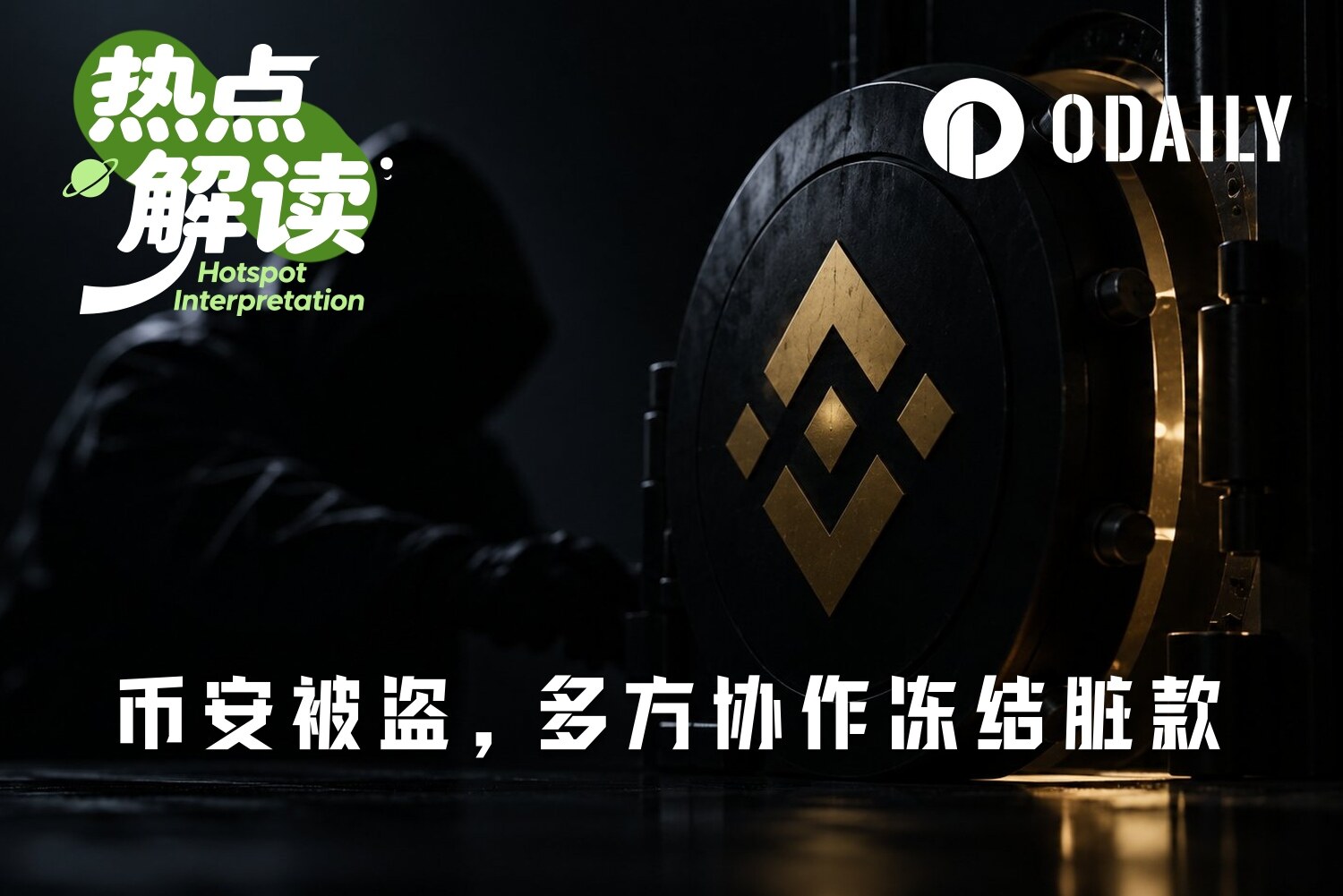
In the early hours of this morning, Binance's hot wallets suffered the largest security breach in cryptocurrency history. Within less than an hour, Binance hot wallets across multiple networks including Ethereum, Bitcoin, Tron, as well as Arbitrum, Avalanche, Optimism, Base, and others were simultaneously compromised, with cumulative outflows approaching $6.3 billion (as confirmed in Binance's latest announcement).
Following the attack, major stablecoin issuers, RWA asset issuers, and public chain protocols launched the largest joint on-chain interception operation in crypto history.
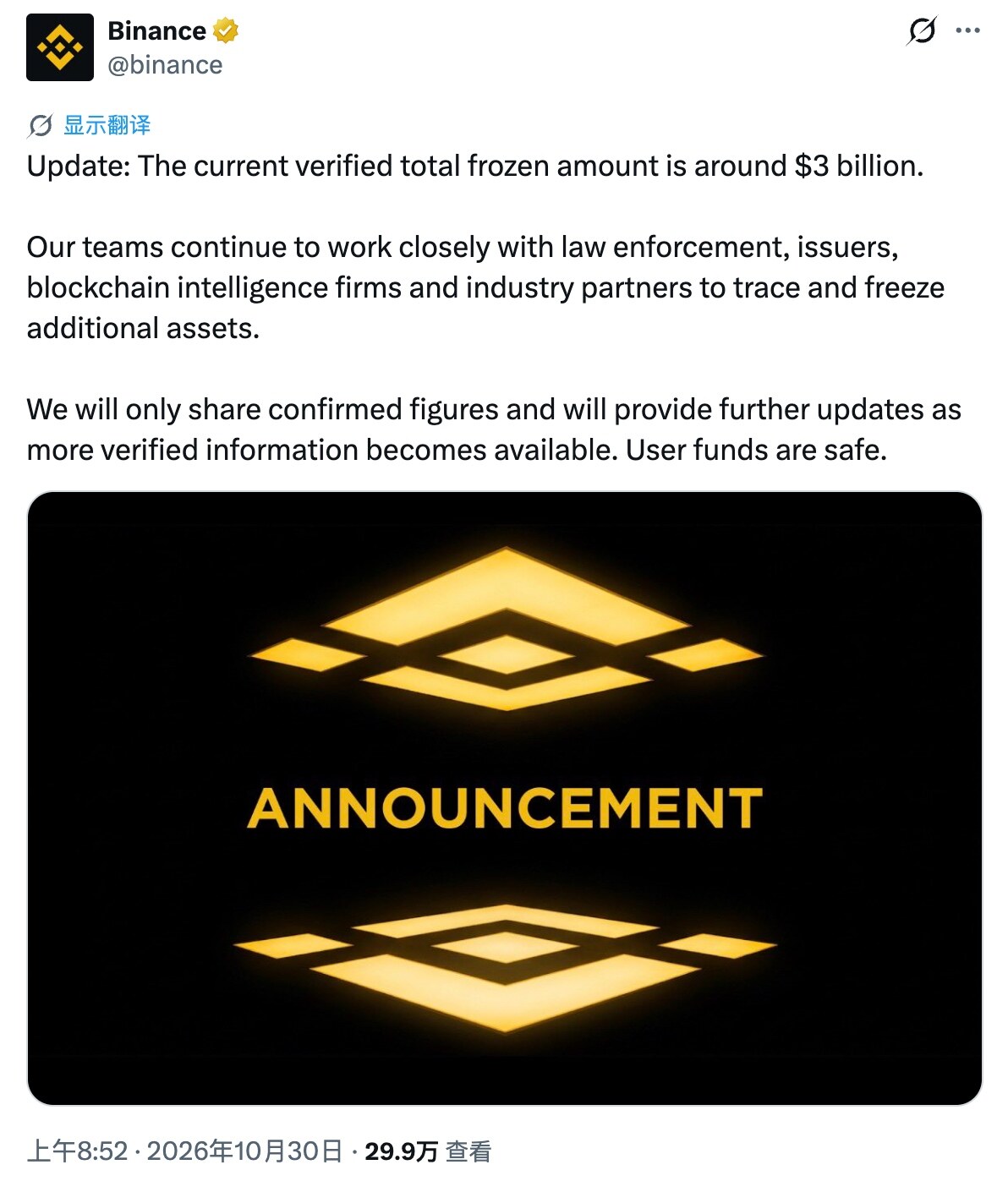
As of 8:52 Beijing time, Binance officially updated the incident handling progress, stating that the total amount of stolen assets confirmed frozen is approximately $3 billion. Binance also stated that the team continues to work closely with law enforcement agencies, asset issuers, blockchain intelligence companies, and industry partners to trace and freeze more assets, and will only publish verified data going forward.
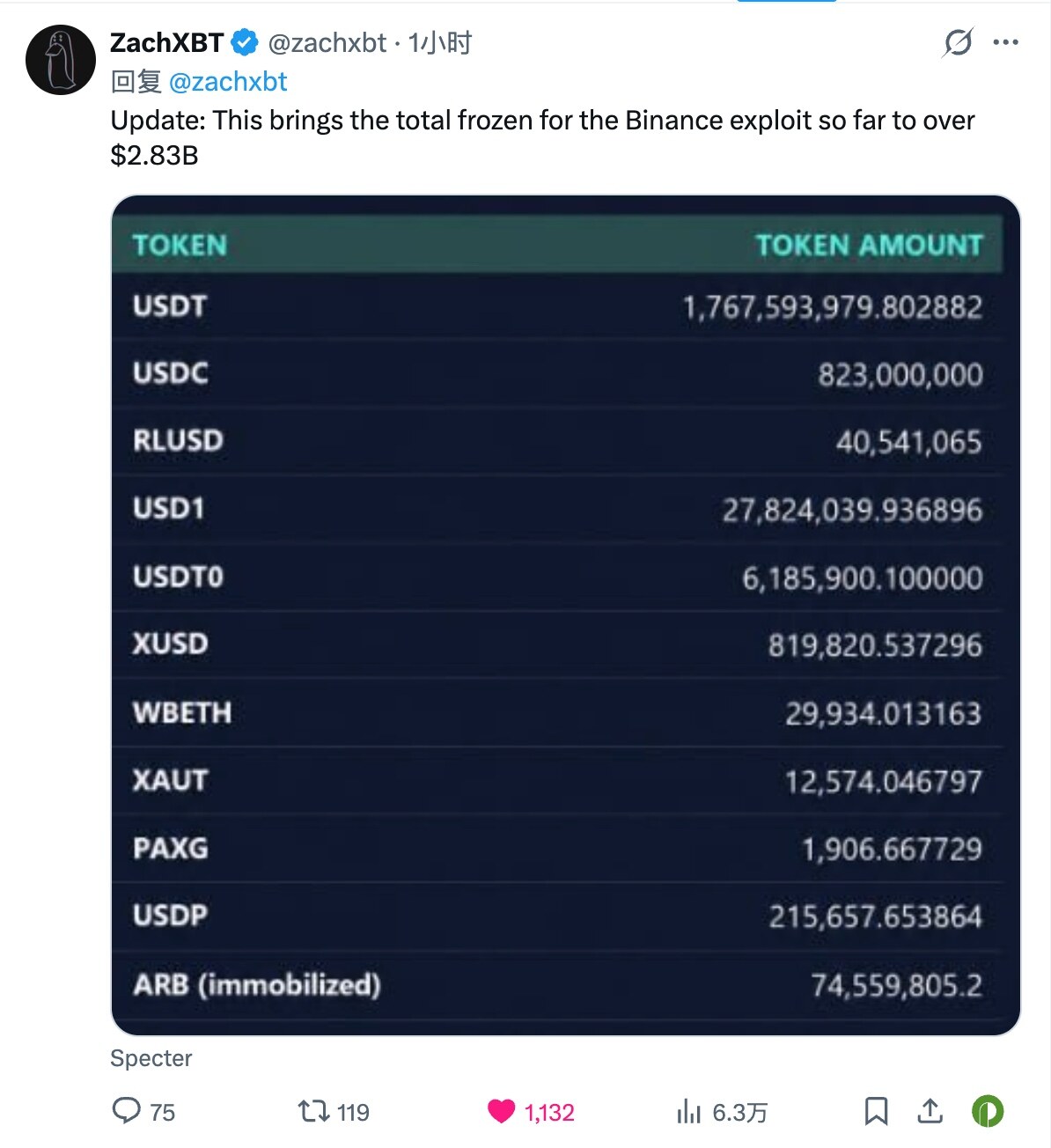
Combining the community's latest on-chain tracking dashboard data (source: ZachXBT) and timeline records, we have compiled the 11 types of assets confirmed to have been frozen by various institutions/protocols as of the time of publication.
Breakdown of the Freezing Operation: Who Is Acting? How Are They Intercepting?
This on-chain interception of up to $3 billion mainly relies on the built-in blacklist or freeze administrator permissions of centralized stablecoins and yield-bearing asset smart contracts, and can be specifically divided into the following four major categories.
Stablecoin Duo: Tether and Circle Lock Down Nearly $2.6 Billion
- Tether (froze over $1.809 billion)
On-chain records show that just 41 minutes after Binance 14 was first swept at 4:24 Beijing time, Tether took the lead at 5:05 by calling the blacklist function on-chain, initially locking 971 million USDT, and at 5:11 expanded the freeze to 1.567 billion USDT.
Subsequently at 5:25, Tether CEO Paolo Ardoino officially posted on X confirming that over 1.567 billion USDT related to the Binance incident had been frozen. With the subsequent blacklisting of additional associated addresses, current on-chain statistics show that a total of 1,767,593,979.80 USDT has been completely locked down.
At the same time, Tether also blacklisted 12,574.05 XAUT (gold token, approximately $35 million) that the hacker casually swept out, as well as 6,185,900.10 USDT0, a cross-chain stablecoin.
- Circle (froze $823 million)
After Binance 34 outflowed a total of 823 million USDC at 4:41 and 4:59, Circle completed the on-chain address blacklisting at 5:13. Subsequently at 5:28, Circle CEO Jeremy Allaire officially posted on X confirming that over 800 million associated USDC had been frozen in coordination with law enforcement.
De acordo com as estatísticas on-chain mais recentes, os 823.000.000 USDC roubados foram totalmente congelados nos endereços do hacker.
Emissores emergentes de stablecoins: Ripple, WLFI, Paxos e StraitsX juntam-se ao cerco
Além dos dois maiores gigantes das stablecoins, alguns outros emissores emergentes de stablecoins também participaram do cerco contra o hacker.
- Ripple: Congelou 40.541.065 RLUSD (aproximadamente US$ 40,54 milhões) nos endereços do hacker;
- World Liberty Financial: Congelou 27.824.039,94 USD1 (aproximadamente US$ 27,82 milhões), bem como 48 milhões de tokens WLFI (aproximadamente US$ 2 milhões);
- Paxos: Congelou simultaneamente 215.657,65 USDP (aproximadamente US$ 215.000) de sua stablecoin emitida e 1.906,67 PAXG (aproximadamente US$ 5,3 milhões) de seu token de ouro;
- StraitsX: A emissora de stablecoin compatível com Singapura StraitsX congelou 819.820,54 XUSD (aproximadamente US$ 820.000).
Ativos empacotados proprietários da Binance: Quase 30.000 WBETH bloqueados no local
Entre os ativos que não são stablecoins, o hacker varreu 29.934,01 WBETH (Wrapped Beacon ETH, no valor de quase US$ 80 milhões a US$ 100 milhões) da Binance 14.
Como o próprio WBETH é um token empacotado de staking líquido emitido oficialmente pela Binance, seu contrato inteligente subjacente possui permissões de restrição administrativa. A equipe de segurança da Binance congelou imediatamente este lote de WBETH por meio de permissões internas após o incidente, e o hacker não pode mais desfazer o staking ou vendê-lo.
Contenção no ecossistema de blockchains públicas: 74,56 milhões de ARB restritos de movimentação
Além dos ativos congelados diretamente por meio de listas negras de contratos de tokens mencionados acima, alguns outros ecossistemas de blockchains públicas (L1 & L2) também estão tomando ativamente medidas de emergência para conter a situação.
Às 8h19, horário de Pequim, desta manhã, o Conselho de Segurança da Arbitrum anunciou oficialmente que tomou uma ação de emergência para transferir 74.559.805 ARB e 8.425 ETH mantidos em endereços identificados como relacionados ao incidente de hack da Binance para uma carteira intermediária congelada. Os endereços que originalmente mantinham esses fundos não podem mais acessá-los, e eles só podem ser transferidos por meio de novas ações do Conselho de Segurança ou de uma votação de governança da DAO da Arbitrum, com os assuntos relevantes a serem coordenados com todas as partes.
Foco de acompanhamento posterior
Com aproximadamente US$ 3 bilhões de fundos roubados congelados, a grande maioria dos ativos de stablecoin nas mãos do hacker foi trazida sob controle.
Atualmente, o foco central do rastreamento on-chain e da ofensiva-defesa mudou completamente para ativos cripto nativos que não podem ser diretamente congelados por meio de contratos — incluindo principalmente aproximadamente 195.000 ETH ainda circulando ou dormentes on-chain (alguns dos quais foram depositados pelo hacker na Aave para tomar emprestado WETH na tentativa de lavar) e 18.270 BTC na rede Bitcoin.
Em relação aos movimentos anormais on-chain dos fundos restantes não congelados e ao progresso da recuperação judicial, o Odaily Planet Daily continuará mantendo reportagens de acompanhamento. Com toda a rede se fechando, quais fundos sujos foram congelados no incidente de roubo da Binance?