
A hot wallet is an online software wallet, handy for everyday trading; a cold wallet is an offline hardware wallet for secure long-term storage. Choose a hot wallet for small amounts you use day to day and a cold wallet for holdings you keep long term; many people use both.
What a hot wallet is
A hot wallet is software-based and usually kept online, used for day-to-day sending and receiving [1]. It generates and stores your private keys online, which makes transacting direct and convenient — but being online long-term also means a larger attack surface.
What a cold wallet is
A cold wallet is hardware-based and runs offline, used for secure long-term storage [1]. Keeping keys offline makes it less vulnerable to online attacks and gives your crypto a higher level of security — at the cost of being less convenient than a hot wallet [2].
Side by side
Being online or offline is the root difference, and most rows below follow from it [2].
| What to compare | Hot wallet | Cold wallet |
|---|---|---|
| Connection | Usually connected to the internet | Keys kept offline |
| Form | A mobile or desktop app, or a browser extension | Usually a hardware device, or another offline setup |
| Main advantage | Convenience | Security |
| Best use | Everyday payments, trading and frequent use | Long-term storage |
| Main risk | More exposure to hacking, malware and phishing | The device can be lost or stolen, and getting funds back then relies on a properly backed-up seed phrase |
| Access | Fast and direct | Takes extra steps |
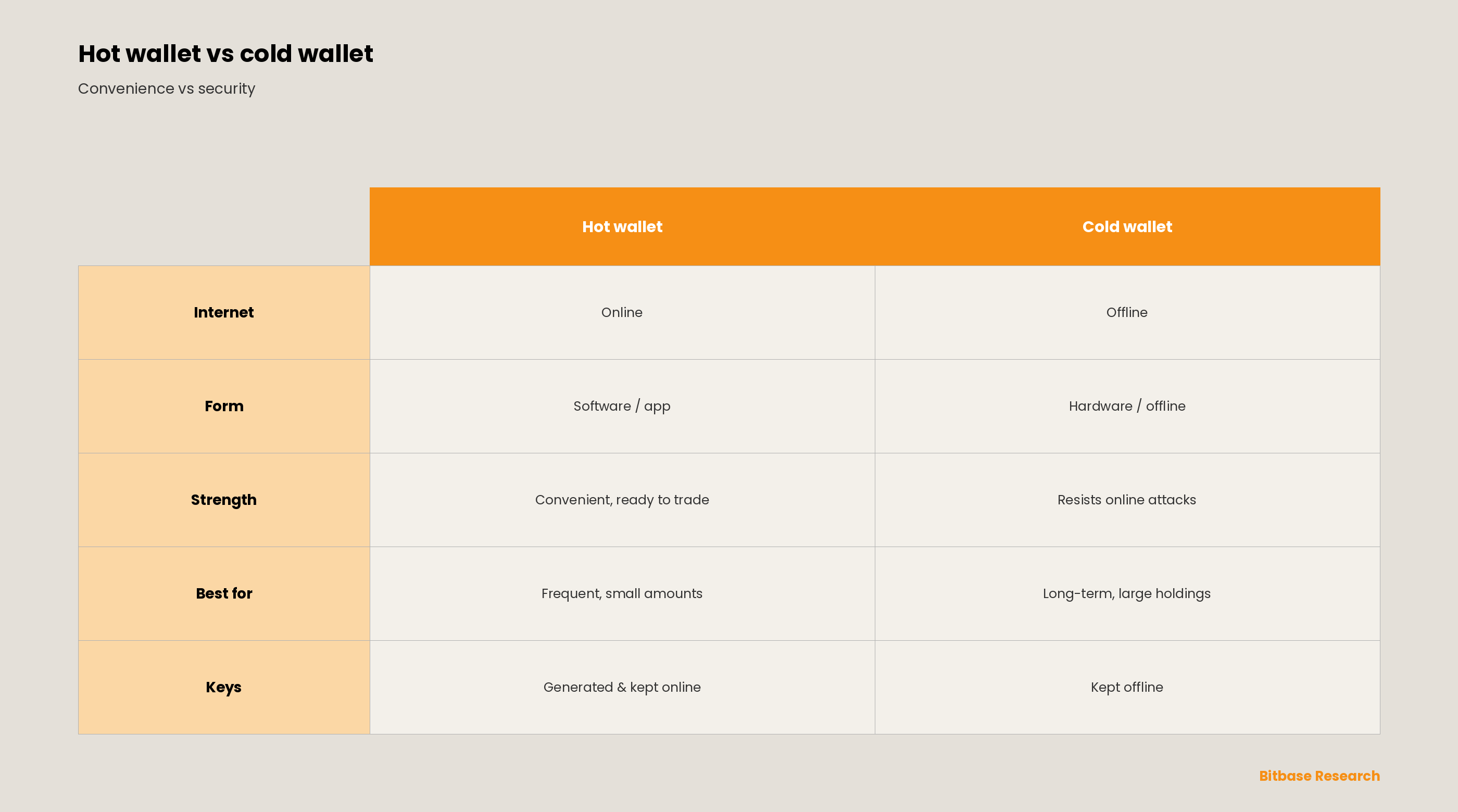
How to choose between a hot and a cold wallet
- A hot wallet fits small amounts you spend or trade often, because its convenience matters most there.
- A cold wallet fits larger holdings you want to store securely for the long term, because it is the safer of the two [2].
- Many people use both: small amounts in a hot wallet for daily use, larger amounts in a cold wallet for the long haul.
The bottom line
Hot wallets are convenient, cold wallets are secure, and the difference comes down to being online or not. Understanding this trade-off helps you pick the right storage for the job. To keep learning the fundamentals, follow more from Bitbase Academy.
Frequently asked questions
Which is safer, a hot wallet or a cold wallet?
A cold wallet is the safer of the two, because keeping its keys offline protects it from online threats [2]. It is not risk-free, though: the device can be lost or stolen, and getting funds back then relies on a properly backed-up seed phrase [2].
Can a cold wallet receive crypto while offline?
Yes. Your crypto is recorded on the blockchain, not stored inside the device [2], so a hardware wallet's address keeps receiving whether the device is connected or not [3]. Before you share the address, check it against the one the device shows on its own screen, because malware on a computer or phone can swap an address you copy [3].
Related reading
Other Bitbase articles on this topic:
Disclaimer: This article is educational content from Bitbase Academy, provided for information only. It does not constitute investment, trading, tax, or financial advice. Written as of October 2026; refer to the latest official information.
References
[1] Coinbase, "Hot vs cold crypto wallet: What's the difference?" coinbase.com
[2] BitGo, "Cold Wallet vs. Hot Wallet: Differences Explained." bitgo.com
[3] Trezor, "Receive crypto in Trezor Suite." trezor.io