News Center




Cardano Foundation Seeks 25M ADA for 2027 Events Despite $1.2M Funding Gap
 ADACardano Foundationtreasury proposalgovernance vote



Kava Lending Protocol HARD Lend Hit by $1.83M Exploit, Moves to Permanently Shut Down New Borrowing
HARD Lend, a lending app on Kava Chain, was exploited through a flaw in its dormant BUSD collateral market that let an attacker inflate collateral value, repeatedly borrow and liquidate, and drain roughly 53.9 million KAVA (about $1.83 million). Some 49.2 million of the tokens were bridged via LayerZero to BNB Chain and sold, with part of the funds now frozen. The Kava team has patched the vulnerability, stressed that the risk was confined to the application layer with mainnet consensus unaffected, and launched a 7-day governance proposal to permanently halt new lending on HARD Lend while winding down existing positions.
 KAVAHARD LendKavasmart contract exploit
8 hours ago

'Tokenization Is Not the Finish Line': Jupiter to Let Users Borrow Against Bullish Shares
At the Breakpoint conference, Jupiter, the largest trading platform on Solana, announced a permissioned lending market on Jupiter Lend that will let users borrow against tokenized shares of BLSH, Bullish exchange's NYSE-listed stock. COO Kash Dhanda noted that of roughly $460 billion in tokenized assets, only about $3.4 billion is actually put to work in DeFi—a 99% utilization gap—stressing that tokenization is a starting point, not the finish line. Jupiter also unveiled Global Passport identity verification and liquidity services for issuers.
 SOLtokenized stockstokenizationLending
15 hours ago

Ledger Brings Clear Signing to Solana, Putting an End to 'Blind' Signing for Jupiter Swaps
Ledger has rolled out Clear Signing on Solana, letting users view and confirm transaction details in plain text right on their hardware wallet instead of signing blindly. The feature covers nine Solana apps and 18 of 22 common actions, starting with Jupiter and Kamino. Ledger is also promoting its Agent Intents queue for AI agents and the Atom touchscreen device with the Solana Seeker app store.
SOLHardware Walletclear signingLedger Atom19 hours ago

Ondo's Stock-Backed Loans Charge No Interest—Borrowers Give Up the Upside
Ondo plans to offer zero-interest USDC loans through Spout, letting holders of tokenized stocks and ETFs borrow up to 50% of their collateral's value. Instead of interest, Spout sells covered calls on the pledged shares and passes the premiums to lenders. If the stock rallies and the calls get exercised, borrowers must deliver shares at the strike price and buy them back at market rates—potentially shrinking their collateral while the loan principal stays the same. Borrowers still bear downside risk and face liquidation thresholds, penalties, and US market-hours constraints. The service excludes the US and several other jurisdictions, and has no public track record yet.
 USDCasset tokenizationstock-backed loanscovered calls
22 hours ago
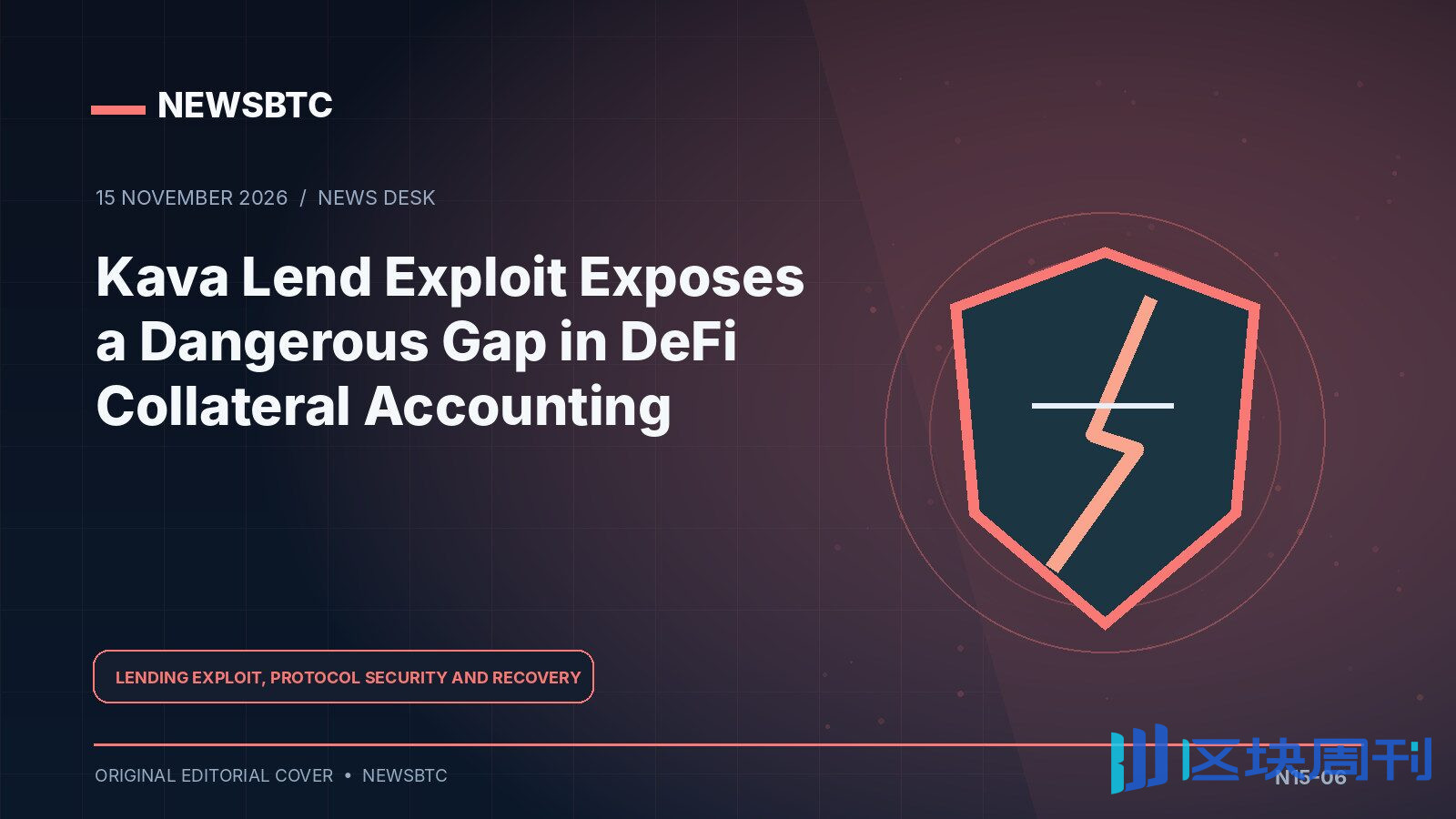
Kava Lend's $55M Exploit Exposes a Critical Gap in DeFi Collateral Accounting
Kava Lend's BUSD market was hit by a roughly $55 million exploit, and the root cause wasn't merely a smart contract bug but a systemic gap in collateral accounting across DeFi lending protocols. The article examines how breakdowns in three areas—collateral valuation, debt pricing, and bad debt handling during liquidations—can let attackers amplify risk exposure through fake collateral, mispricing, or delayed liquidations. It argues that TVL and code audits don't fully reflect security, and that collateral parameters, oracle update frequency, liquidation thresholds, and bad debt mechanisms must work as a closed loop—a costly cautionary tale for the DeFi industry.
 BUSDKava LendDeFi LendingCollateral Accounting
2026-11-16

Emerging Crypto to Watch: ConConAI ($CON) Surges Over 100% Since Its $0.01 Uniswap Listing
This sponsored article covers ConConAI ($CON), which has more than doubled since launching on Uniswap v4 at $0.01 on November 6, trading around $0.02194 as of November 10 according to CoinGecko. It notes that two token burns have cut effective supply to 60 million and highlights the project's AI-commerce network and payment utility model for business partners. Readers are also advised to watch trading volume, liquidity depth, holder distribution, and roadmap execution, with the content not constituting investment advice.
 CONUniswap listingemerging cryptoAI Commerce
2026-11-13

Polymarket launches Nex sandbox, aims for 10x trading capacity
Polymarket has opened sandbox testing for Nex, its Rust-rewritten trading system. The engineering team says Nex can handle 100,000 commands per second, with short bursts up to 150,000—roughly 10x the capacity of its existing central limit order book (CLOB). In internal tests, p99 order latency dropped from 1.55 seconds to 3.76 milliseconds, and startup time fell from 5 minutes to 15 seconds. The team plans a four-week shadow run before deciding whether to deploy officially in mid-December. Existing request and response formats will remain compatible.
2026-11-13

South Korea's Upbit Halts Osmosis (OSMO) Transfers After Network Failure
Upbit, South Korea's largest crypto exchange, suspended Osmosis (OSMO) deposits and withdrawals on the Osmosis chain on November 13, 2026, after the blockchain stopped producing blocks and could no longer confirm transactions. Upbit cited the enforcement decree of South Korea's Virtual Asset User Protection Act as its legal basis, though OSMO spot trading continued as normal. Blockchain infrastructure provider QuickNode confirmed that Osmosis halted block production at height 74,955,152, and both Bithumb and Coinbase also reported transfer issues on the network. Despite the outage, OSMO was still up nearly 14% over the previous 24 hours.
 OSMOOsmosisUpbit
2026-11-13
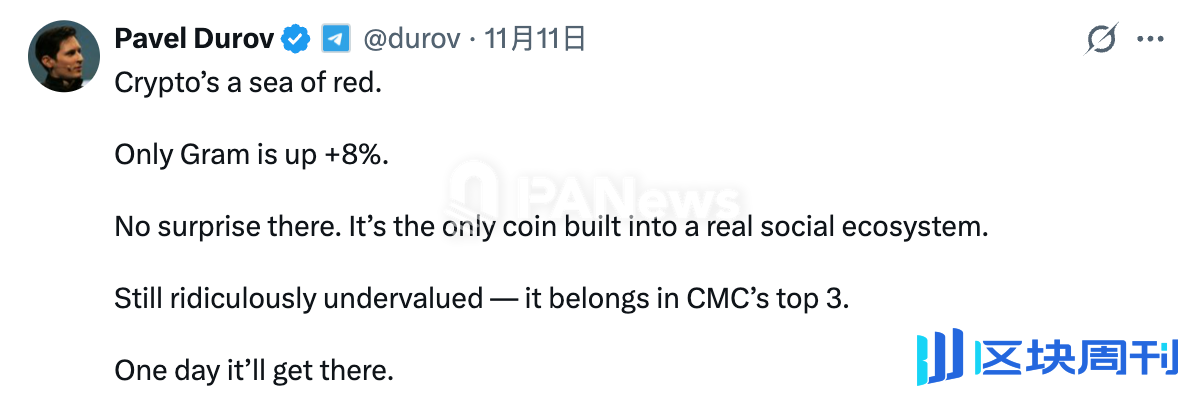
GRAM Defies the Downtrend as Durov Cries Undervalued — Can the Ecosystem Fundamentals Keep Up?
This article examines GRAM (TON)'s recent rally against the broader market and Telegram CEO Durov's claim that its market cap is severely undervalued. Durov argues GRAM deserves a top-three crypto ranking and has taken over TON again with an MTGA strategy. Yet despite Gram wallets surging to 3.53 million, daily active addresses sit at just ~1.5%, with roughly 188,000 actual holding addresses — real adoption remains limited. TON's ecosystem TVL is only about $45.74 million, far below its historical peak, with liquidity highly concentrated. Annual token inflation has risen to around 4%, adding supply pressure. The article concludes that TON still faces many challenges in moving from traffic funneling to genuine adoption.
 GRAMTelegramDurovUndervalued Market Cap
2026-11-13
Hyperliquid Burns $1.53M in HYPE Tokens in 24 Hours as Price Slips
Hyperliquid, the decentralized exchange, bought back and burned 21,200 HYPE tokens worth roughly $1.53 million over the past 24 hours at an average price of $72.31. Since launch, a total of 50.47 million HYPE—5.05% of supply, valued at about $3.51 billion—has been burned, mainly through the Assistance Fund, which automatically captures 97–99% of perpetual and spot trading fees. The AQAv2 upgrade now directs roughly 90% of yield on the platform's USDC reserves toward buybacks, and Hyperliquid has earned $1.41 billion in cumulative revenue since December 2024. HYPE has since fallen to $69.52, down from above $90 in the fall.
 HYPEHyperliquidDEX
2026-11-12