Author: Foresight News
The US dollar index rose to a near 19-month high, erasing the decline triggered by Trump's "Liberation Day" tariff policy. Persistently elevated US inflation and rising expectations of Federal Reserve rate hikes are driving global capital back toward the dollar.
Written by: Yang Dapan, Jin10 Data
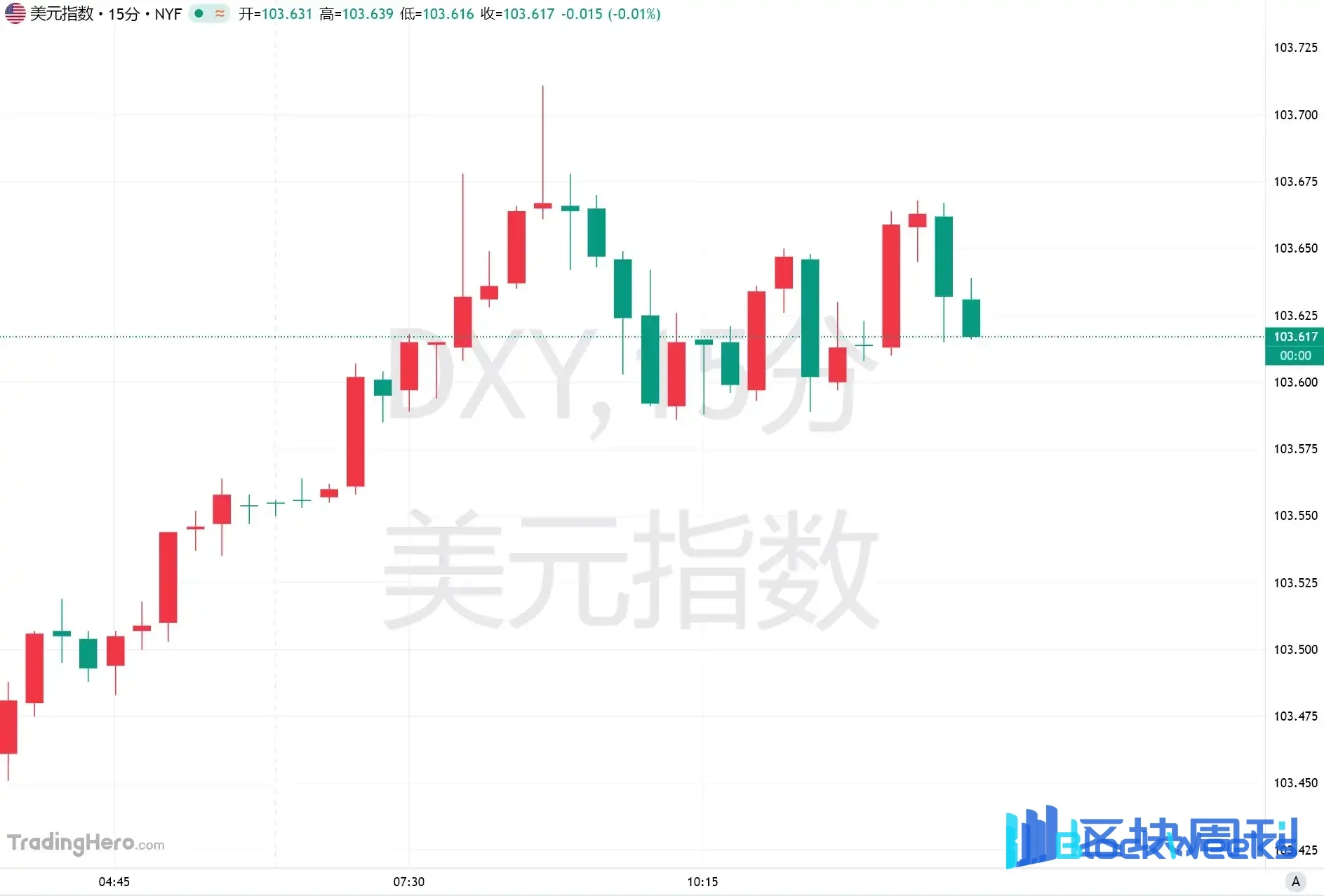
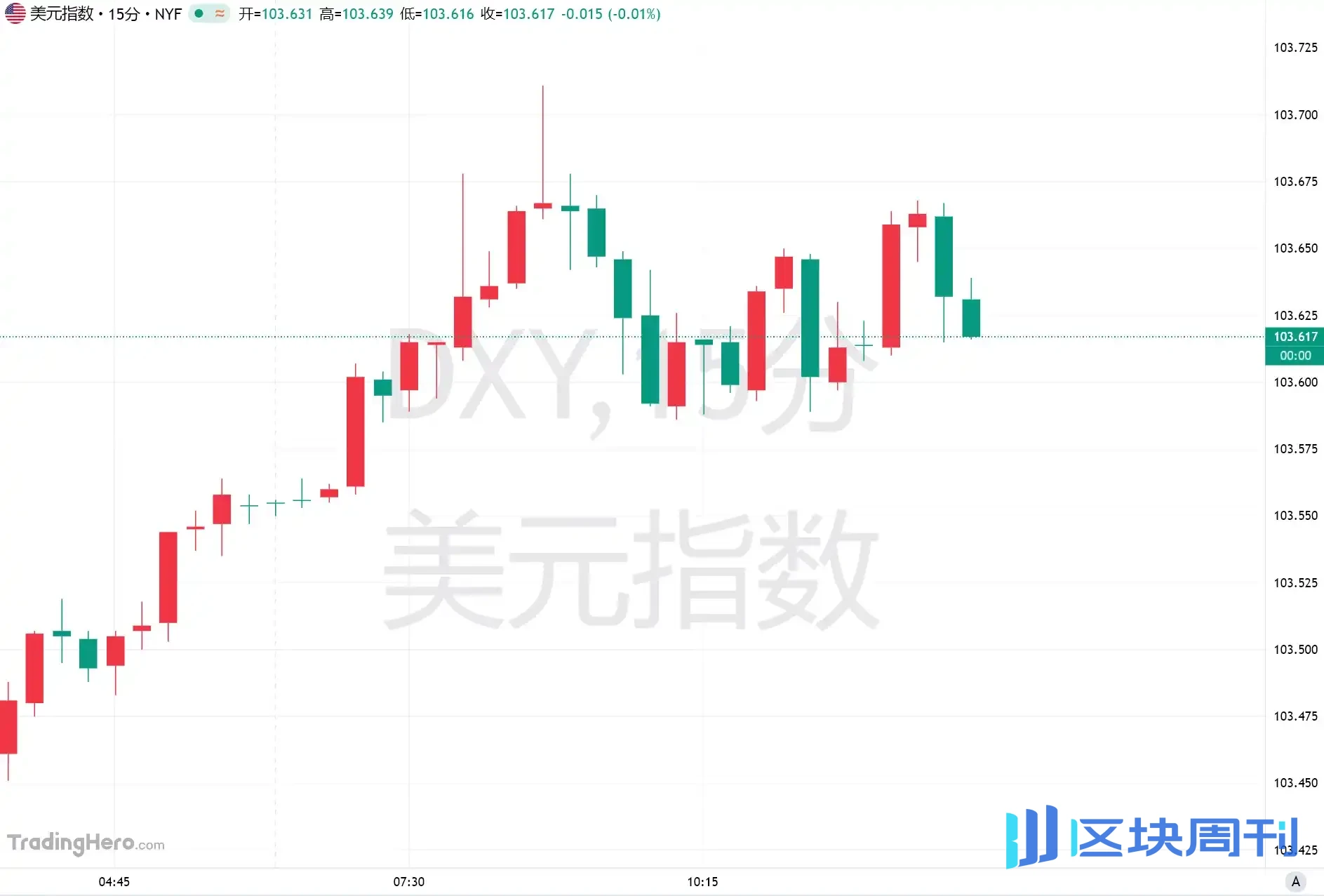
The US dollar is completing a notable reversal. As US inflationary pressures persist and expectations of further Federal Reserve rate hikes strengthen, the dollar index has recovered all of its losses since April 2025, when Trump announced large-scale tariff measures. As of Tuesday, the dollar index had risen about 1.7% this month, returning to the level seen on April 2 last year, when US President Trump announced the so-called "Liberation Day" tariff policy.
On Wednesday, the dollar index hovered around 103.6, extending its strong performance after previously hitting a 19-month high. The euro fell below the 1.10 mark against the dollar at one point this week, the first time since the tariff shock in April 2025.
Compared with last year, when the market worried that US trade policy would harm economic growth and thus sold off the dollar, the main factors driving exchange rates have now shifted to the Federal Reserve's policy outlook and the relative resilience of the US economy.
Inflation Exceeds Expectations, Fed Rate Hike Bets Become the Main Driver of Dollar Gains
The core driver of this dollar rally comes from the market's repricing of the US interest rate path. The Federal Reserve implemented its first rate hike since 2023 in September this year, raising the federal funds rate target range to 3.75%-4.00%.
Since then, US inflation data has continued to exceed expectations, further reinforcing the market's judgment of monetary policy tightening. The US Consumer Price Index (CPI) rose 0.4% month-on-month in October, higher than market expectations. Federal Reserve Governor Waller previously said that if inflationary pressures persist, the Fed should consider a one-time 50 basis point rate hike in December.
Interest rate futures data show that traders have basically priced in a 25 basis point rate hike in December and expect two more hikes of the same magnitude in 2027.
St. Louis Fed President Musalem said on Tuesday that to control inflation in a timely manner, the US economy may need to experience several rate hikes before the spring of 2027. He believes that the current policy rate may be about 1 percentage point lower than the level needed to restore price stability.
As the market raised interest rate expectations, US Treasury yields climbed significantly, with the 10-year Treasury yield breaking back above 5%. Last week, the US Treasury market experienced its worst selloff in 18 months.
Higher yields on dollar assets have also further enhanced the dollar's appeal to international capital. ING strategist Francesco Pesole believes this is a dollar rally driven by macroeconomic factors. US inflation and hawkish Fed statements continue to push up rate expectations, while falling energy prices make investors doubt how much longer other central banks can continue raising rates.
US Economy Remains Resilient, European Debt Risks Amplify Dollar's Advantage
In addition to monetary policy, the relatively strong performance of the US economy is also an important reason for the dollar's recovery. Despite pressure from the US-Iran war, trade policy uncertainty and the recent pullback in tech stocks, the US economy has still shown some resilience.
The latest data show that US third-quarter GDP grew at an annualized rate of 3.4%. October retail sales rose 0.2% month-on-month, and core retail sales excluding autos, gasoline, building materials and food services rose 0.6%, exceeding market expectations.
This performance supports the market's judgment that the US economy can still withstand higher interest rates.
Van Luu, head of global solutions strategy at Russell Investments, said that the hawkish Fed and the previous strong performance of US stocks together constitute an environment conducive to a stronger dollar.
At the same time, economic and political risks outside the United States are also increasing. European investors continue to focus on the fiscal sustainability of France and Belgium, and rising debt pressures in some eurozone countries are putting pressure on the euro and other major currencies.
Lee Hardman, senior foreign exchange analyst at Mitsubishi UFJ Financial Group (MUFG), pointed out that although falling energy prices and the decline in US tech stocks have brought some adverse effects on the dollar, the dollar has so far shown strong resilience. Over the past month, the other nine major G10 currencies have all depreciated against the dollar.
Concerns About Policy Independence Ease, Emerging Markets Face Dual Pressure
Another change in the dollar's trajectory comes from the market's reassessment of the Federal Reserve's independence. Previously, some investors worried that the Trump administration might pressure the Fed to keep interest rates low, thereby undermining the appeal of dollar assets.
But after the US midterm elections in November, the Democratic Party won control of both chambers of Congress, and some institutions believe that the political pressure on the Federal Reserve may have eased somewhat.
Barclays analysts pointed out on Tuesday that the midterm election results reduced market concerns about interference with the Fed's independence. However, the continued appreciation of the dollar is also putting pressure on emerging markets.
A stronger dollar usually means higher repayment costs for dollar-denominated debt, and may also exacerbate capital outflows and local currency depreciation risks in emerging markets.
Simon Quijano-Evans, head of strategy at Macro Hive, believes that some emerging market currencies are simultaneously bearing the dual impact of a rising dollar and domestic political uncertainty.
As for the dollar's subsequent trajectory, the market focus will shift to the Federal Reserve's December policy meeting and whether inflation and employment data in the coming months can continue to support rate hikes.
If US inflation slows again, or continued adjustments in tech stocks weaken international capital inflows, the dollar may still face new downward pressure.